Creative, resilient and self-driven learners who collaborate, communicate and solve problems

6 march 2019
Alyangula Area School: We learn for life
News from the Principal
Mission, Vision and Values Last year we revisited out Mission, Vision and Values and ensured we were all moving in the same direction. Our mission is our fundamental purpose and this is our motto “We learn for life”. In other words- the core purpose of our school is to teach students how to learn. Our vision is defines our future expectations. Alyangula Area School students are creative, resilient and self-driven learners who collaborate, communicate and solve problems. And to achieve this we have a framework of curriculum, instruction, assessment taking place in a safe and supportive environment. Finally our values tell us how we must behave to achieve our vision. TOGETHER we, RESPECT ourselves, each other, school and community, strive for EXCELLENCE, show COURAGE in all situations and demonstrate SAFETY in all that we do.
A focus on learning This year the school’s key directions continue to increase the number of students attending more than 80% and to improve students two year gain in NAPLAN Writing in years 5, 7 and 9. To achieve these goals we will focus on: An engaging and safe learning environment, quality teaching and learning about being a learner. The writing improvement goal will be targeted at all students from Preschool to Year 12 and teachers have already collected baseline data and are planning targeted teaching and learning activities in collaborative teaching teams. In 2019 we will continue the Kitchen Garden program, Interschool Sport for Years 4-9 and will introduce a focus on Digital Technology. We continue to explicitly teach how to be an engaged and active participant in the learning process – learning about being a learner. Successful learners can explain what they are learning and what their next steps are. They understands the learning process, accepts mistakes as part of learning and have a growth mindset.
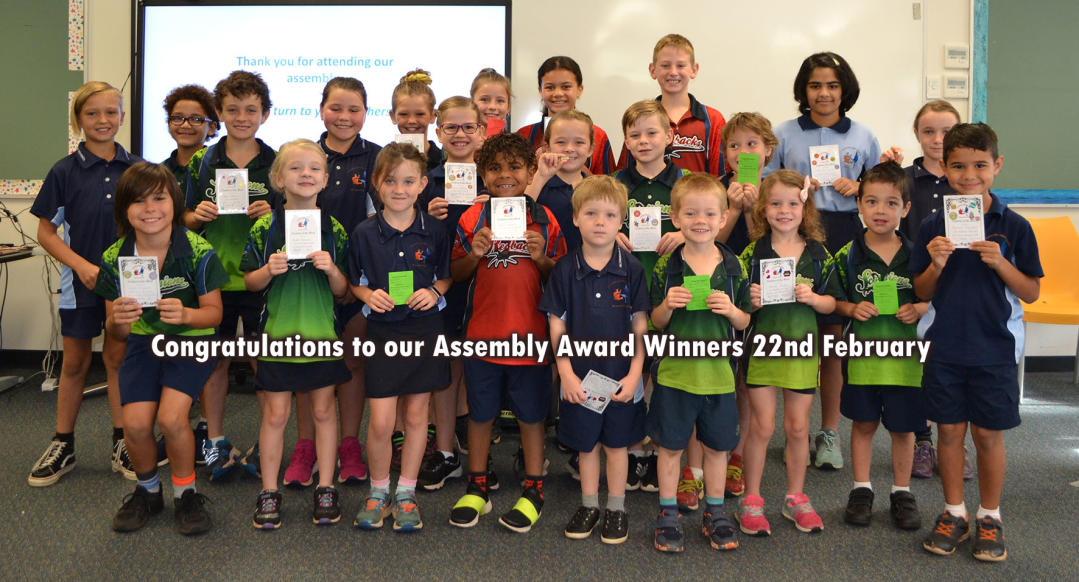
School Captains, SRC and Sports Captains Over the past few weeks students have been involved in the election of our student leaders. Students have elected School Captains, House Captains and members for the Student Representative Council (SRC). We have included a list of our new school student leaders in the newsletter and they have been recognised at school assemblies. Our student leaders have an important role in our school as they are role models for our school values and exemplify our motto of ‘We learn for life’. Congratulations to our 2019 student leaders!
Skoolbag App and the newsletter Skoolbag is a free mobile app our school uses to communicate directly to parents. We use it primarily for distributing our school newsletter and other school documents. It is also directly linked to our school website. We are currently trialling using Skoolbag to create our newsletter as it make it more easily read on phones and tablets. For added convenience, install the Skoolbag App to your phone or tablet. Hard copies of the newsletter are on display around the school and at the arcade, and you can collect your hard copy version from the front office.
School Council Our AGM is this Thursday 7 March starting at 7pm. We have three parent member positions available. Everyone is welcome!
This week’s article from Parent Ideas is about strengths. There is a free webinar tonight (Wednesday 6 March) for parents – see details at the end of the article that follows!
“TOGETHER we, RESPECT ourselves, each other, school and community, strive for EXCELLENCE, show COURAGE in all situations and demonstrate SAFETY in all that we do.”
Tania Kolomitsev , Principal
Unearthing kids’s strengths
by Professor Lea Waters (PhD)
Personality strengths – our character – play a big role in helping us build our our talents. Think about anyone who has built a talent and imagine if it could have been done without character. Imagine Einstein without curiosity, The Beatles without creativity, Mother Teresa without compassion or Neil Armstrong without bravery.
Yet for decades, scientists were blind to character strength. We focused on talent, often on physical strength and skills. In fact, when I first ask young children what they think a strength is, they almost always point to their biceps or talk about being able to lift something heavy.
Once you get familiar with the language of strengths and a framework for seeing them, you’ll see character strengths easily in your child. In fact, you may find your child calls on their character strengths more often than on talent to meet life’s challenges.
Three key elements of a strength
You’ve probably seen a child joylessly perform at a piano recital. They may hit all the right keys, but there’s no energy or enthusiasm. It’s as if they don’t want to be there. On the flip side, we’ve seen the child onstage who’s clearly motivated and energised and who fearlessly flails through every mistake – of which there are many.
It turns out that three elements come together to form a strength. For purposes of strength-based parenting, we need to keep our eye on all three:
1. Performance (being good at something).
Watch for when your child shows above-age levels of achievement, rapid learning, and a repeated pattern of success.
2. Energy (feeling good doing it)
Strengths are self-reinforcing. The more we use them, the more we get from them. They fill us with vigour. You’ll notice your child has abundant energy when using a strength.
3. High use (choosing to do it)
Finally, look for what your child chooses to do in their spare time, how often they engage in a particular activity, and how they speak about that activity.
For true strengths, these three elements form a beautiful feedback loop: great performance provides the child with a shot of high energy, so the child naturally chooses to do more. In turn, high use – also known as effort or practice – improves performance levels. So, for example, if you notice that your child is energised when they play the piano, and you provide enjoyable opportunities for them to play, if they’re mining a true strength they will likely practise more, which improves their performance, which then energises them … and so the loop continues.
Keeping this triad in mind will help you avoid pushing your child into an area that seems like a strength just because your child is good at it. It will also help you differentiate between whether your child is bingeing on an activity in an escapist way or expressing a true strength.
For example, when a parent asks me, ‘My son is great at computer games and wants to play all the time. Is that a sign of a strength?’ I reply, ‘Observe his energy levels at the end. Is he drained and cranky? Or energised and full of life? Are you seeing the full triad?’ Computer games can tap into a child’s strategic and problem-solving skills or stimulate creativity (in some games, you invent whole new worlds). Or they might just be about filling time.
So look for all three signs. When you see your child do something well, with energy, and repeatedly, you’ll know you’ve unearthed a strength.
You can attend our upcoming webinar, Switching on your child’s Strengths, at no cost!
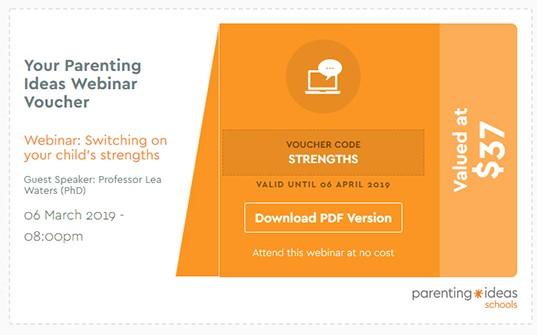
As your school is a Parenting Ideas Schools member, you can attend our upcoming webinar Switching on your child’s strengths with Professor Lea Waters at no cost! Use the voucher code below to register for the webinar valued at $37 per person.
About the webinar
The extraordinary results of focusing on our children’s strengths rather than always trying to correct their weaknesses is explained in this webinar.
As a strength-based scientist for more than 20 years, Professor Waters has seen how this approach enhances self-esteem and energy in children and teenagers, and how parents find it exciting and rewarding. With many specific techniques for parents, she will demonstrate how to discover your children’s strengths and talents, use positive emotions as a resource, build strong brains, deal with problem behaviour and talk about difficult situations and emotions.
When
Wednesday 6 March 2019 8:00 PM – 9:00 PM AEDT.
Price
This webinar is $37 per person to attend, and is free of charge to families at schools that have a Parenting Ideas membership.
How parents can redeem the voucher
1. Click this link: https://www.parentingideas.com.au/parent-resources/parent-webinars/webinar-switching-on-your-childs-strengths
2. Click ‘Add to cart’
3. Click ‘View cart’
4. Enter the voucher code STRENGTHS and click ‘Apply’. Your discount of $37 will be applied to the order. This voucher is valid until 6 April 2019.
5. Click ‘Proceed to checkout’
6. Fill in your account details. These are the details you will use to login to your account and access your parenting material
7. Click ‘Place Order’
 |
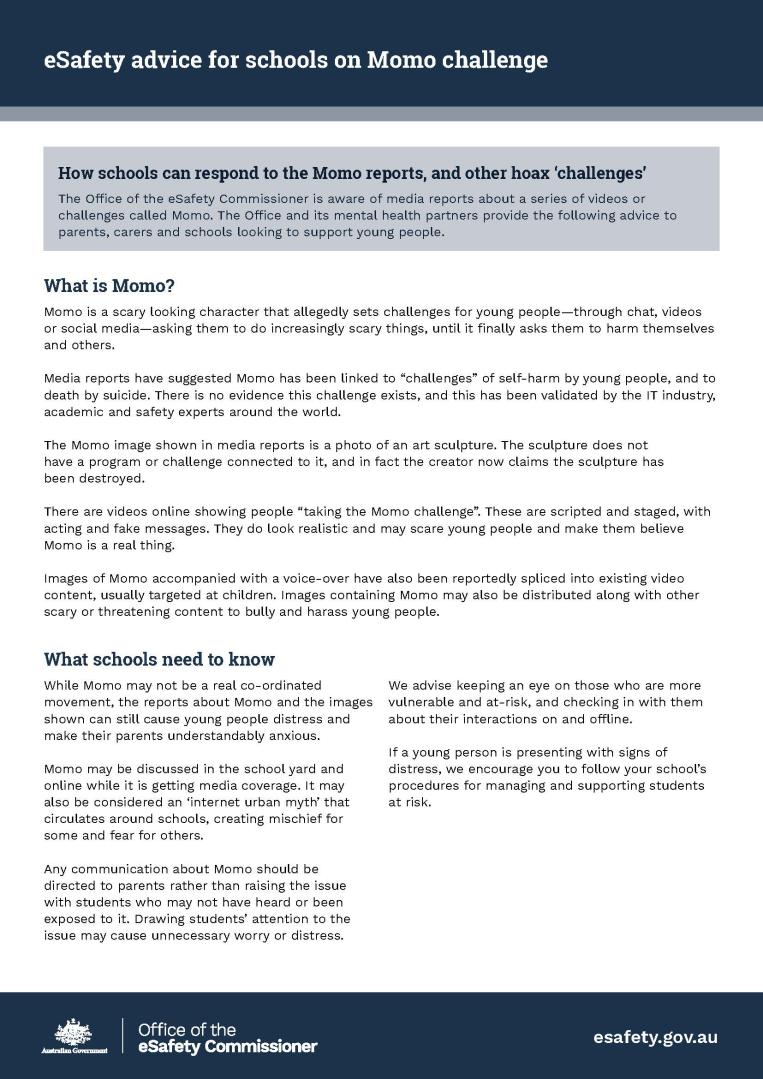
Momo Challenge Advice pdf Download |
Parenting Ideas
Language of independence building
by Michael Grose
Families always develop shared language around the values that have strong meaning for them. If independence and self-sufficiency are important then it will be reflected in your family’s proprietary language.
In fact, it’s through shared language that culture exists. If you are looking to building a culture of independence in your family (or in your classroom) then creating your proprietary language around independence is a great way to start. The following twelve examples of independence-building language and principles behind them that will help you create your own family’s language.
|
File Name Download |
|
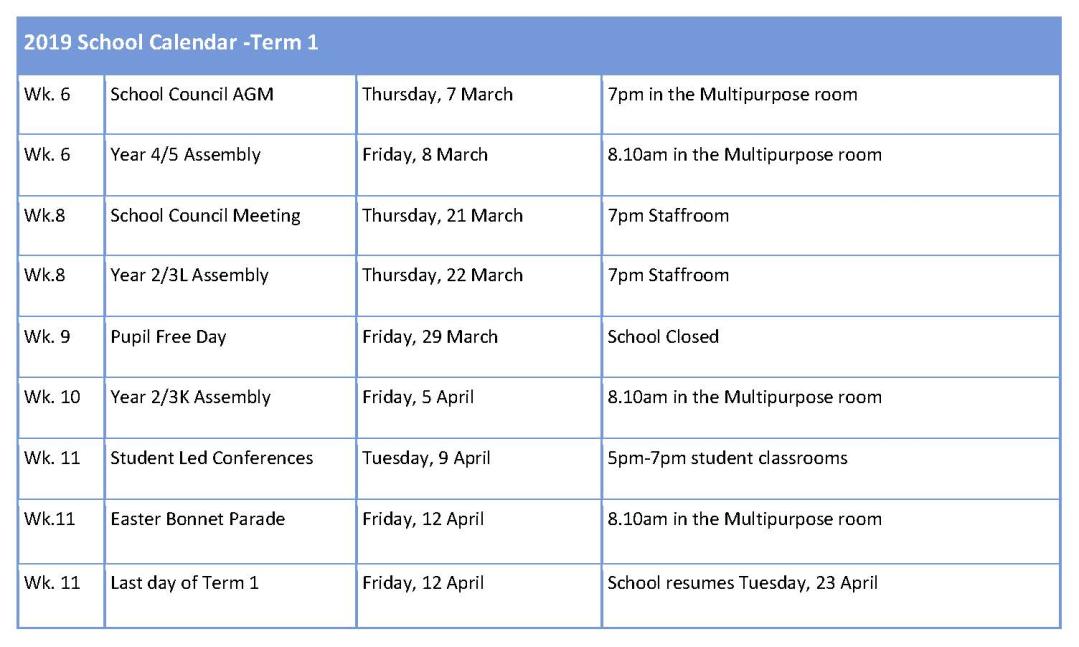
2019 Calendar Term 1 Download |
Outlook Psychology to visit Groote Eylandt
Outlook Psychology will visit Groote Eylandt every week and operate 3 days a week while they are here.
Michelle Grant and Timeka Galea are the two visiting psychologists who are working in collaboration with the Mental Health team on the isaldn.
They are open to receiving private referrals from parents and can will liaise with you to arrange assessments. They will also be in touch with the school to conduct necessary assessments at school, if required.
Please check assessment pricelist for specific prices.
Please contact Noella Goveas on 8987 6366 or jessica.goveas@ntschools.net for a referral form.
|
Outlook Psychology Pricelist Download |