Our school is committed to ensuring that how we teach your child is based on what we know makes the biggest difference to their learning. In our school, we have a focus on using the ‘What works best’ eight practices for effective teaching.
These practices include:
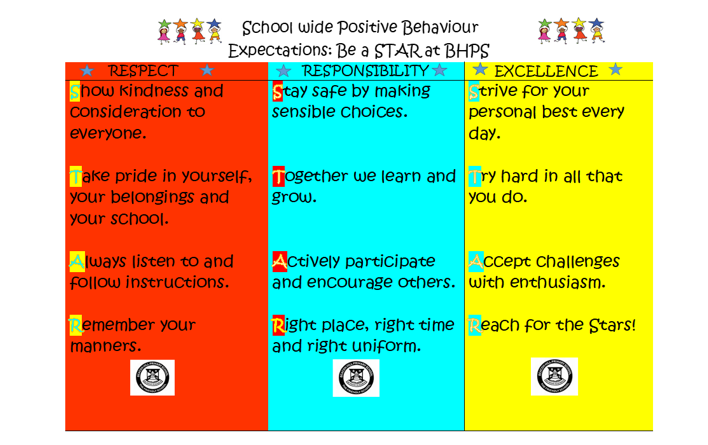
· Having high expectations of your child. In our school we do this by having a common set of PBL guidelines and procedures across our school supporting positive behaviour. Teachers also regularly share student work samples to ensure that assessment expectations are consistent and that a culture of high expectations is promoted across our school.
· Using explicit teaching in the classroom. In our school we do this by developing accessible resources to support teachers to effectively differentiate lessons and assessments. You may have heard your child refer to a WAGOLL! A WAGOLL is an acronym (What A Good One Looks Like) for a piece of work or sample to show students an exemplar of success. Learning Intentions and Success Criteria are also visible in classrooms for students to refer during their learning.
· Giving effective feedback to your child on their learning. In our school we do this by emphasising feedback that is about a student’s progress or effort and encourages students’ self-regulation.
· Using data to inform how we teach your child. In our school we do this by using the student data we gather to identify students’ learning needs, develop learning targets and monitor progress. Data is regularly used as the basis for professional discussions, including how assessment data helps identify and address students’ needs.
· Using regular and effective assessments so we know how your child’s learning is going. In our school we do this by focusing on the design and implementation of effective formative assessment practices in order to obtain useful data to inform practice.
· Supporting the wellbeing of your child by looking out for their mental, physical and emotional health. In our school we do this through targeted social and emotional learning programs such as Friendology, Bounce Back and Smiling Minds. In 2020, we also ran a student-led initiative called Challenge Week to increase a sense of belonging across the school.
· Managing the classrooms well so they are safe, positive and stimulating environments for learning. In our school we do this by establishing, teaching and revisiting whole school and classroom expectations for behaviour.
· Making sure our teachers collaborate with each other, and experts outside the school, so teaching practice continuously improves. In our school we do this by opening classrooms to one another and discussing the effectiveness of different strategies, supporting the broad aim of working together to improve our practice.
In addition, research shows that greater levels of support and engagement from parents and carers are associated with better student academic and wellbeing outcomes. We also know that students learn more effectively when the home and school environments form complementary and supportive roles for learning. It is for this reason that we are focused on continuing to foster the partnership between our school and parents.
The Department of Education has now released a ‘What works best’ resource for parents and carers, which provides tips for having conversations with your child about their learning. You can visit the department’s Parent Hub where you’ll find other tailored resources for parents and carers, as well as message from the NSW Minister for Education the Hon. Sarah Mitchell MLC https://education.nsw.gov.au/parents-and-carers/learning/what-works-best-2020-update